DO YOU KNOW WHAT THE TEXT ON THE LENSES YOU USE MEAN?
- Are you sure that you have chosen the right lenses you use in your factories?
- Is the lens offered or recommended to you the right one?
- How about you at least have an idea about this?
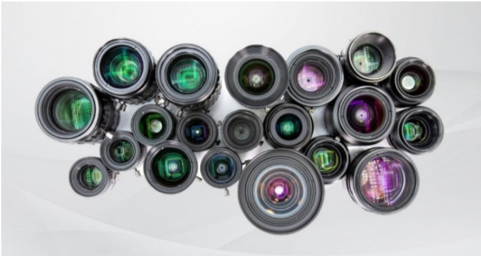
There are many numbers written on the lenses we see every day in the field of quality control. In this article, we would like to briefly talk about the fixed focus lenses that are most frequently used in the industry, so that we can easily understand these writings that look like hiaroglyphs. After reading this article, you will be able to visit your factory and easily check whether you are using the appropriate lenses.
To start, fixed focal lenses have 2 adjustment rings and a total of 4 lens identification information.
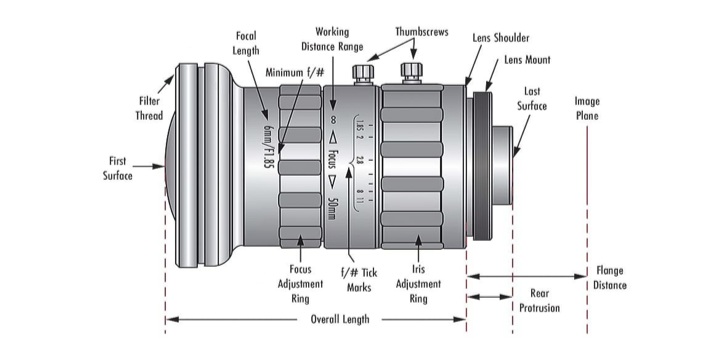
- Focusing ring definitions
- Focal length information
- Aperture ring designations
- Widest aperture value
1. Designations on the focusing ring:
In camera, the term "focus" is a concept that refers to the clarity and sharpness of an image. It is possible to focus objects at different distances by adjusting the focus ring of the lens.
Focusing distance is controlled from the focusing ring. The ring closest to the product you are viewing is the focusing ring. Focus can be adjusted from minimum working distance to infinity.
Fixed focal length lenses are widely used optics in machine vision and are well suited for standard applications. The numbers here indicate the distance in meters between the product and the camera to ensure clear focus.
For example; When we set the ring to 0.35, we need to place the product that needs to be viewed clearly approximately 350 mm away from the camera. If the distance between the product and the lens is 120 cm, we need to set the focusing ring to 1.2.
If it is not possible to measure the distance, the sharpest state of the image can be found by looking at a contrasting part of the captured image and turning the focus ring.
2. Focal length information:
The number written in "mm" under the lens is the focal length. Short focal length lenses (e.g. 16mm) provide a wide angle of view and are typically used for looking at nearby items; Long focal length lenses (e.g. 100mm) offer a narrower angle of view and are used to view distant products or observe a smaller area of nearby products.
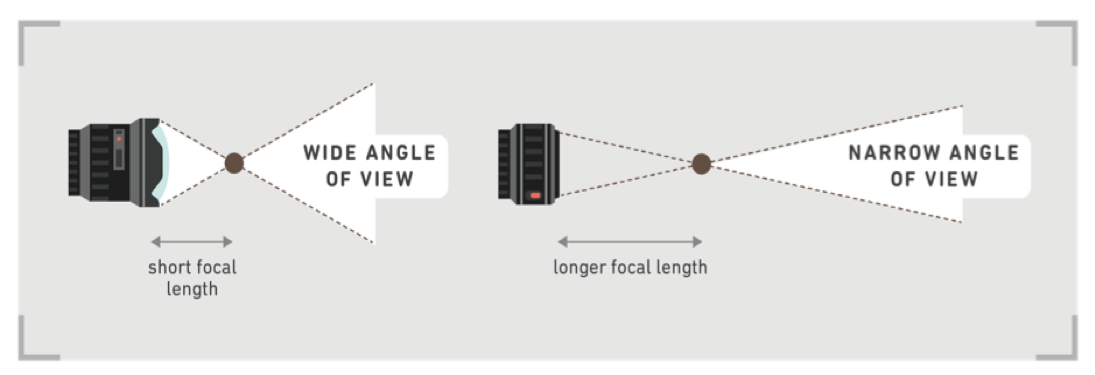
For example, to display a bottle; If I need to place the camera 20 cm away, I need to use a 16 mm lens, while if I need to place the camera 2 meters away, I need to use a 100 mm lens so that a bottle can be fully displayed in the image I get in both setups.
If I put the camera 20 cm away and use a 100 mm lens, only the barcode of the bottle can be seen in the photo frame I view.
*** The focal length of the lens should not be confused with the focusing distance. The focal length of a lens is an unchangeable property specific to the lens, defined as the distance between the optical focal point inside the lens and the image sensor in the camera, and specifies the angle of view of the lens.
Focusing distance can be changed to focus on products at different distances.
3. Aperture adjustment ring:
You may have noticed that sometimes you squint your eyes to read an article, why do we do this?
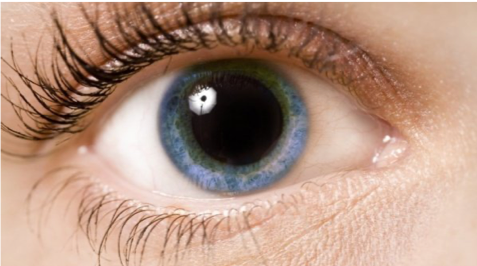
Cameras offer several different ways to control light when taking photos. One of the most important of these ways is the diaphragm. Aperture is a open-close mechanism inside a lens and controls the amount of light that reaches the sensor.
It may be helpful to think of it like the pupil of an eye: Your pupil dilates in the dark, so it lets in more light; In bright light, it becomes smaller, so it receives less light and sees more clearly.
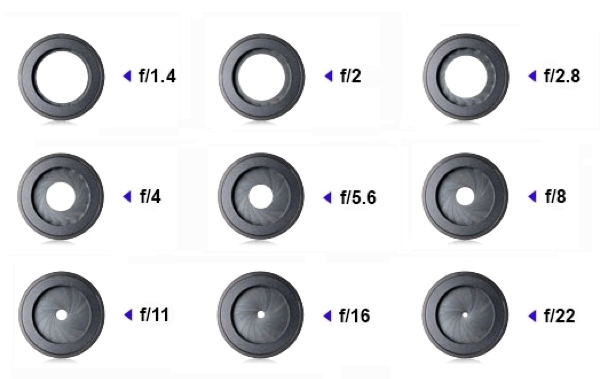
The ring farthest from the product you are viewing is the aperture adjustment ring. By looking inside the lens, you can see that the aperture opens and closes when you adjust this ring. In this way, you can determine the amount of light entering the camera.
Aperture is measured by a value called the f-number; The smaller this value is, the wider the aperture opens and receives more light, meaning brighter images. Let's examine my aperture value formula to understand why a smaller value equals a larger aperture.
*** Aperture value = Focal length of the lens / Diaphragm diameter
Let's find the maximum aperture diameter of the lens in the photo above: 1.4 = 8 mm / x mm, that is, aperture diameter = 8/1.4 = 5.7 mm. Using the same formula, we can find that the aperture diameter of a lens with a 50 mm focal length should be 35.7 mm for it to be f1.4.
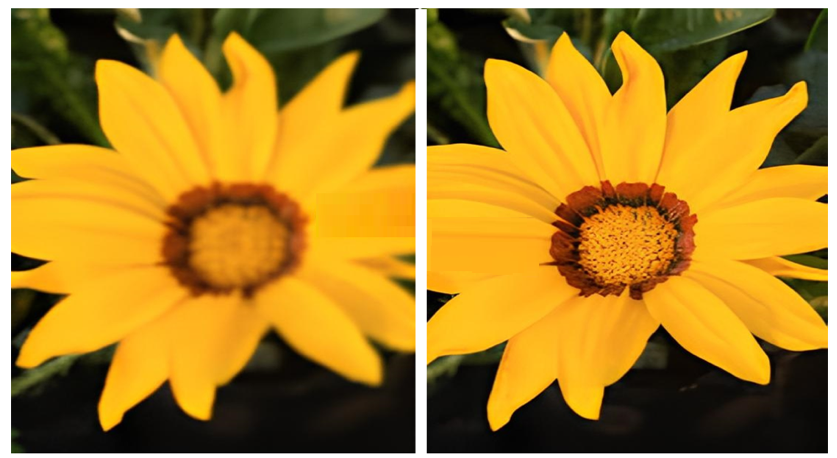
It is worth noting that the aperture not only controls the amount of light, but also affects the depth of field. The definition of depth of field is the distance of the clear area in the photo on the z axis. A wide aperture (e.g. f/1.8) results in less area being in focus (e.g. 10cm between 65 and 75cm), while a narrow aperture (e.g. f/16) results in more area being in focus (e.g. 80cm between 30 and 110cm).
4. Widest aperture value:
The numbers next to the focal length tell you the maximum f value the aperture will open. So, is the widest aperture value very important?
If you have read this far, let us give you some detailed information and end our blog.
Another important aspect of understanding the effects of the aperture is light conditions. Using a wide aperture in low light conditions allows you to let in more light so you can achieve the required fast exposure time (making the displayed photo brighter). It is a method that can be used to get a clear image of the part in motion on fast lines. But you should also know that you will lose depth of field. With this logic, if you need high depth of field, closing the aperture close to the maximum may offer you a solution. This is also why we squint when we cannot read a text. By looking through a narrower aperture, we imitate a narrow aperture and see a little more clearly.
If you don't want to give up both exposure time and depth of field, how about using stronger light.
Example: What can we say about the lens in the picture?
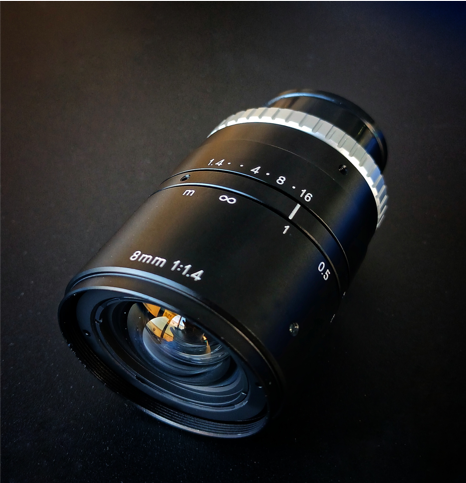
For example, the lens in the photo is a lens with a focal length of 8mm and a maximum aperture of f/1.4. Currently the aperture ring is set to f/16 aperture and the focus ring is set to 1 meter distance.
Finally, for example, which cameras is this lens suitable for? And is the resolution high enough quality in terms of distortion?
In our next blog about lenses, we will also talk about the lens-ccd size relationship and the Modulation Transfer Function (MTF) value that determines lens quality...?