
How Do Thermal Cameras Work?
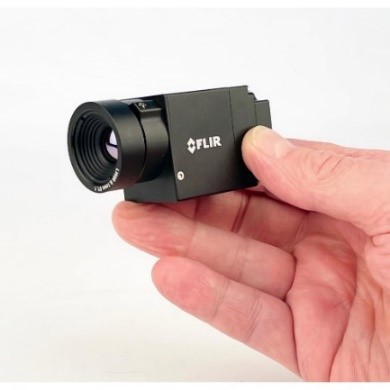
A thermal camera is a non-contact device that detects infrared energy (heat) and converts it into a visual image.
Let's dive into the science of thermal cameras and the invisible world of heat they allow us to see.
DETECTION OF INFRARED WAVES, NOT VISIBLE LIGHT
The first thing to know about thermal cameras is that they do not work like regular cameras. Regular daylight cameras and the human eye work on the same basic principle: visible light energy hits something, reflects off of it, a detector picks up the reflected light and then converts it into an image.
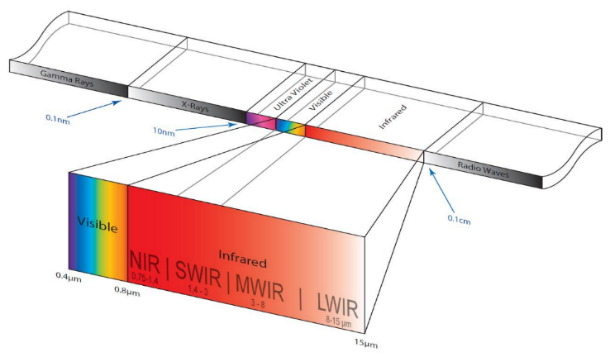
Thermal imaging devices create images from heat, not visible light. Heat (also called infrared or thermal energy) and light are part of the electromagnetic spectrum, but a camera that can detect visible light does not see thermal energy. Thermal cameras capture infrared energy and use the data to create images through digital or analog video outputs.
It is based on the detection of infrared radiation (IR) emitted by objects in the form of heat waves, falling within the wavelength range of 1 to 14 micrometers in the electromagnetic spectrum.
INSIDE THE THERMAL CAMERA;
The thermal camera consists of a special lens that allows IR frequencies to pass, a thermal sensor, processing electronics and a mechanical housing.
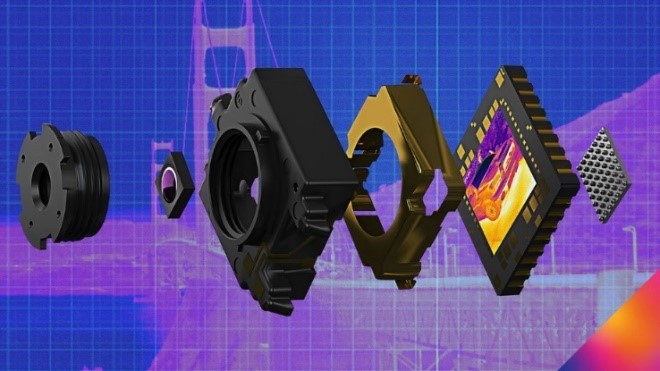
The lens focuses infrared energy onto the sensor. The sensor is available in various pixel configurations from 80 × 60 to 1280 × 1024 pixels or more. This is the resolution of the camera.
These resolutions are low compared to visible light imagers because thermal detectors must detect energy with much larger wavelengths than visible light, requiring each sensor element to be significantly larger. As a result, a thermal camera usually has much lower resolution (fewer pixels) than visible sensors of the same mechanical size.
Important features to consider when choosing a thermal camera include resolution, field of view, focus, thermal sensitivity, and spectral range.
WHAT CAN THERMAL CAMERAS DETECT?
The heat detected by the infrared camera can be measured very precisely, allowing for a wide variety of applications.
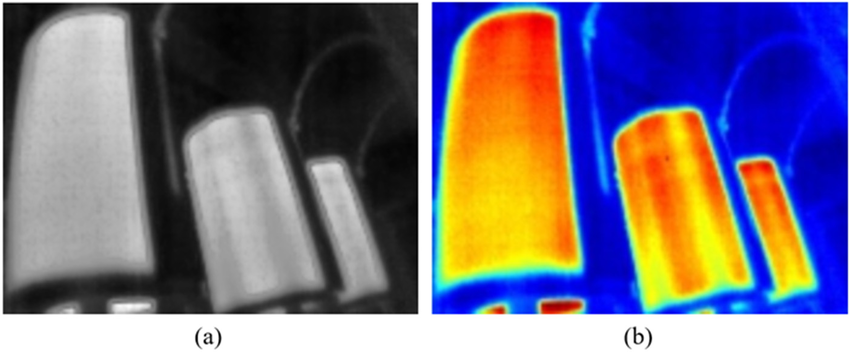
The thermal camera can detect very small differences in temperature (as small as 0.01°C) and display them with shades of gray or color palettes, often based on temperature changes, to make interpretation easier. Colder temperatures are usually represented by shades of blue, purple, and green, while warmer temperatures are represented by shades of red, orange, and yellow.
Everything we encounter in our daily lives, even ice, emits thermal energy. The hotter something is, the more thermal energy it emits. This emitted thermal energy is called “heat signature”.
When two objects next to each other have slightly different heat signatures, they appear quite clearly to the thermal sensor, regardless of lighting conditions.
The potential uses of thermal cameras are almost unlimited. Originally developed for observation and military operations, thermal cameras are now widely used in industrial automatic detection and image processing applications.
* In our upcoming blogs, we will discuss the use of thermal cameras in industrial automatic detection and image processing applications in more detail.